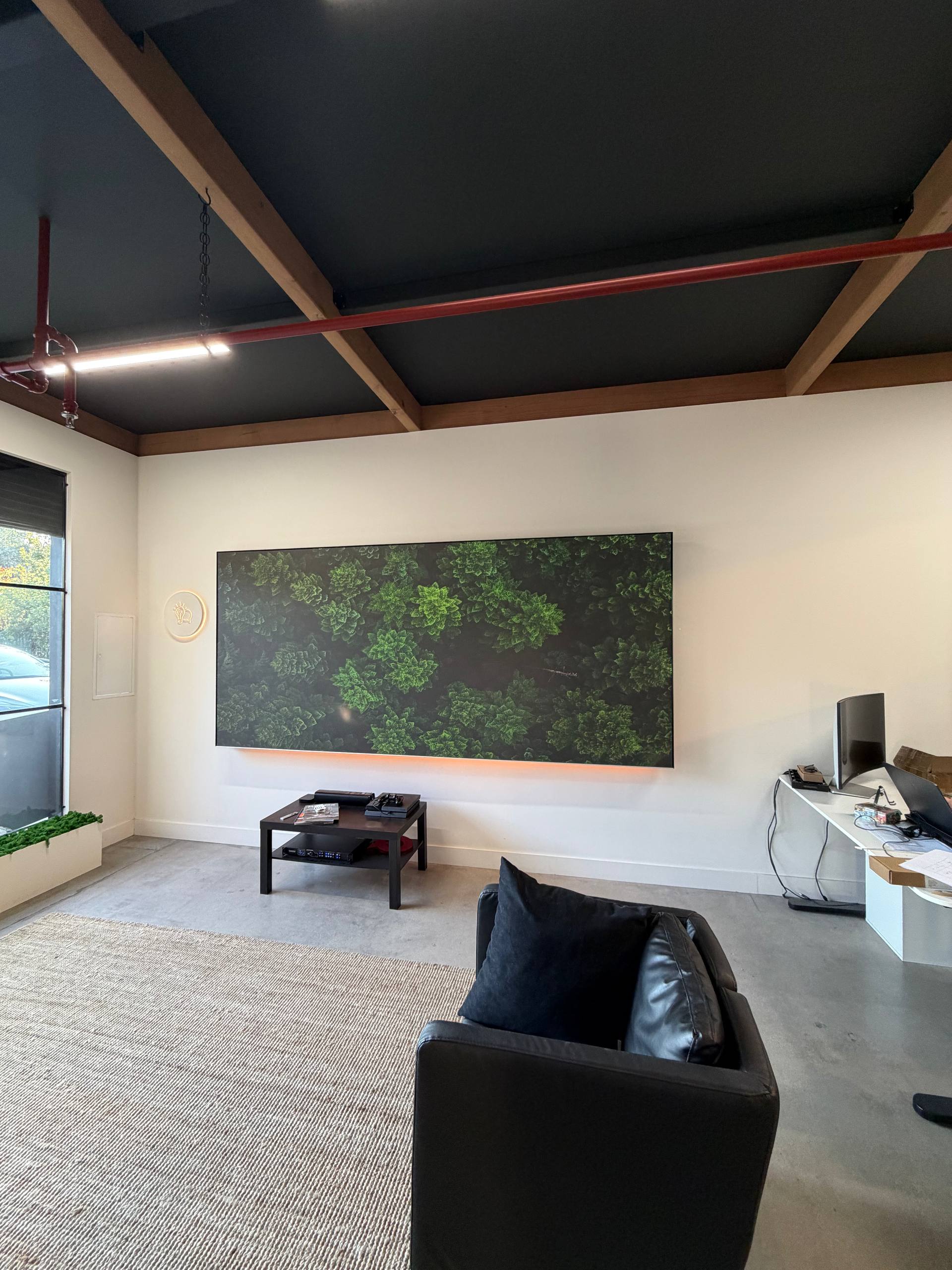
You are comparing LED walls, and every spec sheet lists brightness in nits. 600, 1,000, 2,000. Bigger sounds better, but a wall that is too bright in a dark theater tires your eyes, and a wall that is too dim in a sunny living room washes out. So how bright is bright enough?
LED wall brightness depends on one thing above all: the light in your room. This guide explains what nits are, gives you room-by-room targets, and shows how to read a brightness spec without being fooled by it.
Quick Answer
For most homes, an LED wall around 1,000 nits is plenty. It holds up in rooms with windows and still dims comfortably for movie night. Dark theaters need only a few hundred nits in use, while sunlit and outdoor spaces need more. Match brightness to your room’s light, and ask for sustained, full-screen numbers.
A nit is a unit of brightness equal to one candela per square meter. It measures how much light a screen sends toward your eyes. A higher nit rating means a brighter image.
Cinema people use a different unit, the foot-lambert. One foot-lambert equals about 3.4 nits. Here is how the two compare:
| Nits | Foot-lamberts | What it is |
| 48 | 14 | Standard cinema screen brightness |
| 100 | 29 | Common reference level for standard dynamic range video |
| 300 | 88 | A bright, comfortable home level |
| 1,000 | 292 | Typical HDR highlight level and a strong living room level |
Converted at 1 foot-lambert ≈ 3.426 nits.
The cinema figure comes from the screen standard of 14 foot-lamberts, which is about 48 nits. Standards bodies such as SMPTE publish these reference levels.
A cinema is dark and controlled. Your home is not. Windows, lamps, and white walls all add light that competes with the image. Brightness must overcome that light, or blacks turn gray and colors look flat.
HDR adds another reason. HDR content is commonly mastered with highlight levels of 1,000 nits or more, so a wall with headroom shows sunlight glints and bright highlights with real punch. SDR video needs far less.
Use this table as a planning guide. These are rules of thumb, not standards, and every room is different.
| Room | Light level | Suggested brightness | Why |
| Dark dedicated theater | Controlled, little ambient light | A few hundred nits in use | Lower levels protect your eyes and keep blacks deep |
| Media room with some light | Dimmable lamps | 300–600 nits | Handles lamps and bright scenes |
| Living room with windows | Daylight and lamps | About 1,000 nits | Holds contrast against daylight |
| Sunlit room or glass-walled space | Strong direct light | 1,000+ nits | Overpowers glare |
| Outdoor patio or poolside | Direct sun | Outdoor-rated system | Sunlight is far stronger than any indoor light |
In a light-controlled room, you do not need a very bright wall. At cinema levels near 48 nits, the image is already comfortable. Home theaters often run a bit higher, especially for HDR, but a few hundred nits is plenty. A wall with extra capacity is useful, because you can dim it, but you will rarely run it at maximum.
This is where brightness matters most. Daylight pours onto the screen, and a dim wall loses contrast. A wall around 1,000 nits keeps the picture punchy at midday and still dims for evening viewing. It is also why MicroLED performs well where projectors struggle. Our comparison of MicroLED vs OLED vs projector covers this in detail.
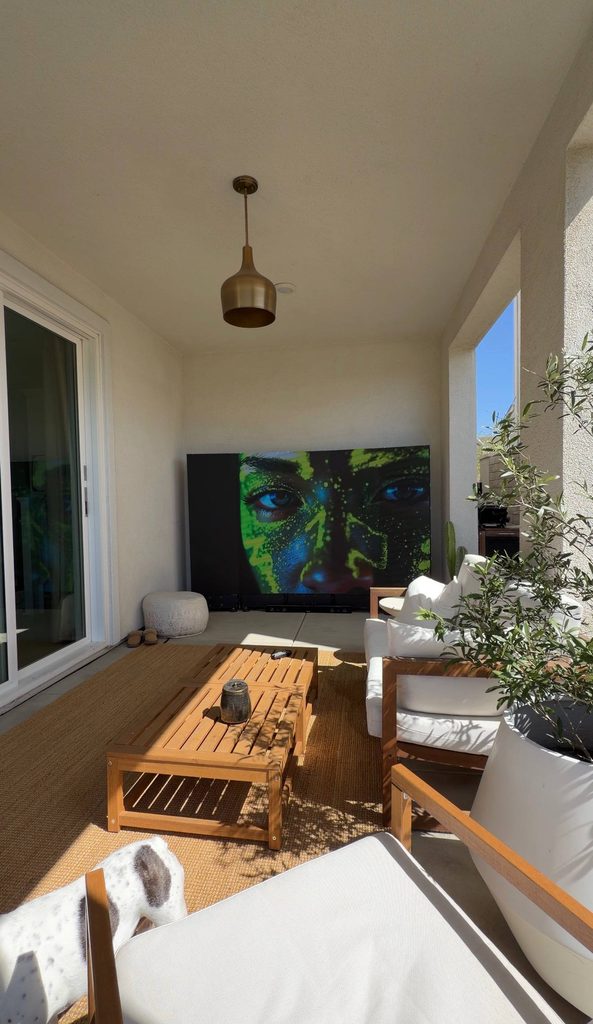
Sunlight is far stronger than any indoor lighting, so outdoor walls are built differently. They need much higher brightness, plus weather protection. That is why IYO LED makes Eredim as a dedicated outdoor platform, in 115-inch and 159-inch configurations, rather than adapting an indoor wall.
This is the most common trap on a spec sheet.
A big LED wall shows large bright areas, like snow scenes and daylight skies. Full-screen, sustained brightness is the number that tells you how it will look in real use.
Ask these questions:
Often, yes. A brighter wall pushes more current through the LEDs, so it uses more power and gives off more heat. That affects your electrical plan and ventilation. Our guide to MicroLED video wall cost shows how electrical work and installation shape the total budget.
The good news is you control how bright you run the wall. A system with headroom can sit at a comfortable level for movies and rise for daylight. Integration with Control4, Crestron, or Savant lets a single “Movie Mode” command dim the wall and the lights together.
Alinor is IYO LED’s fully custom COB MicroLED wall, available in 4K, 6K, and 8K UHD at 0.6, 0.7, and 0.9 mm pixel pitch, and it is built for 1,000 nits of brightness. That makes it a strong match for living rooms with windows and for bright, open spaces, while it dims comfortably for a dark theater.
SERA is the more accessible, multi-format option for home theaters and living rooms. Eredim is for outdoor installations that face direct sun.
| System | Best for | Brightness fit |
| Alinor | Custom walls, bright living spaces | 1,000 nits |
| SERA | Multi-format home theaters and living rooms | Confirm with our team for your room |
| Eredim | Outdoor patios, pools, theaters | Built for outdoor light |
Browse our residential MicroLED displays to see them in real rooms.
Follow these steps:
New to LED walls? Start with our complete guide to LED walls. To understand how sharpness fits in, read our pixel pitch and resolution guide.
For most homes, about 1,000 nits is plenty. It handles windows and daylight, and it still dims for movie night. Dark dedicated theaters need only a few hundred nits in use.
A nit is a unit of screen brightness equal to one candela per square meter. A higher number means a brighter image.
No. In a dark room, a wall that is too bright tires your eyes and lifts black levels. Brightness headroom is useful, but you should run the wall at a level that suits your room.
Peak brightness is the maximum light a small area can produce briefly. Sustained brightness is how bright the full screen stays over time. Sustained, full-screen brightness shows how a wall performs in real use.
Yes. Direct sunlight is far stronger than indoor light, so outdoor walls need much higher brightness and weather protection. IYO LED’s Eredim is built for permanent outdoor installations.
The right LED wall brightness is not the biggest number. It is the level that fits your room’s light, your content, and your comfort. For most homes, around 1,000 nits covers everything from midday sports to late-night films.
Ready to match a wall to your room? Compare Alinor and SERA, then contact IYO LED for a custom MicroLED quote. Tell us about your room’s light, and we will recommend the right setup.