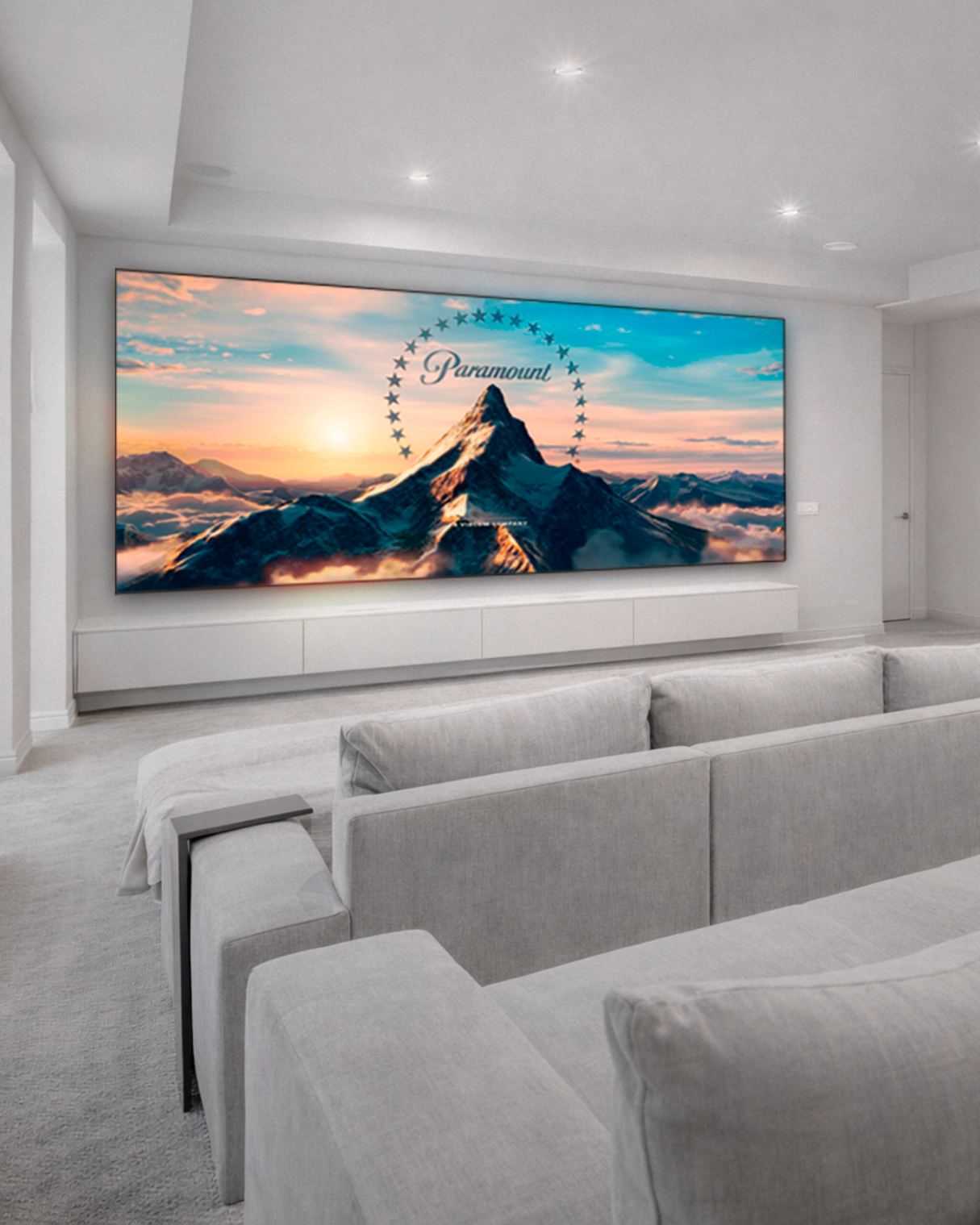
You are ready to put a big LED wall in your home. Then the quotes arrive, and nothing lines up. One lists panels only. Another lists a system. A third says “contact us for pricing.” How do you compare them?
This LED wall buying guide gives you 12 questions that cut through the noise. Ask them of every vendor, and you will know what you are buying, what it costs, and who stands behind it. Each question links to a deeper guide if you want more detail.
Quick Answer
Before you buy an LED wall for your home, ask 12 questions: size and shape, seating distance, pixel pitch, brightness, technology, processing, the complete installed price, installation, control, warranty, lifespan, and who engineers it. Get every answer in writing, and compare complete quotes, not panel prices.
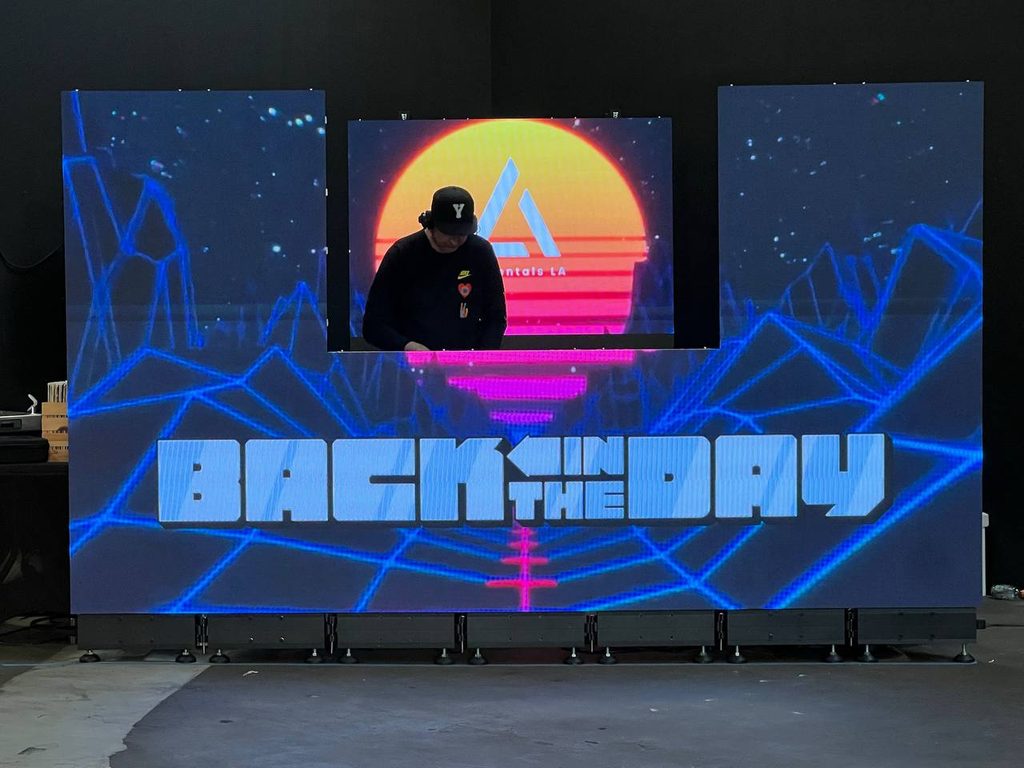
An LED wall is not a product you pick off a shelf. It is a system built from modules, a processor, a structure, and installation, all sized to your room. Two homeowners can both ask for “a big wall” and end up with very different budgets and results.
That is why the right questions matter more than the right brand name. They turn a vague shopping trip into a clear, comparable plan. For a broader primer, start with our complete guide to LED walls.
Measure the available width and height, and note any niche or opening. Then decide on the shape. A TV is locked at 16:9, but an LED wall can be 21:9, 32:9, or a custom size. Ask the vendor which aspect ratios the system supports and how it handles each one. Our guide to size and aspect ratio explains how to choose.
Pixel pitch is the distance between LEDs in millimeters. A smaller pitch looks sharper up close but costs more. For 20/20 vision, individual pixels blend at about 6.8 feet for 0.6 mm, 7.9 feet for 0.7 mm, and 10.2 feet for 0.9 mm. Choose the largest pitch that looks smooth from your closest seat. Our guide to the best pixel pitch for home theater includes a full viewing distance chart.
Resolution depends on wall size and pixel pitch. A 165-inch wall at 0.9 mm lands at about native 4K. A smaller wall at the same pitch has fewer pixels. Ask for the exact pixel count, and whether 4K, 6K, or 8K options exist for your size. Our pixel pitch and resolution guide explains the math.
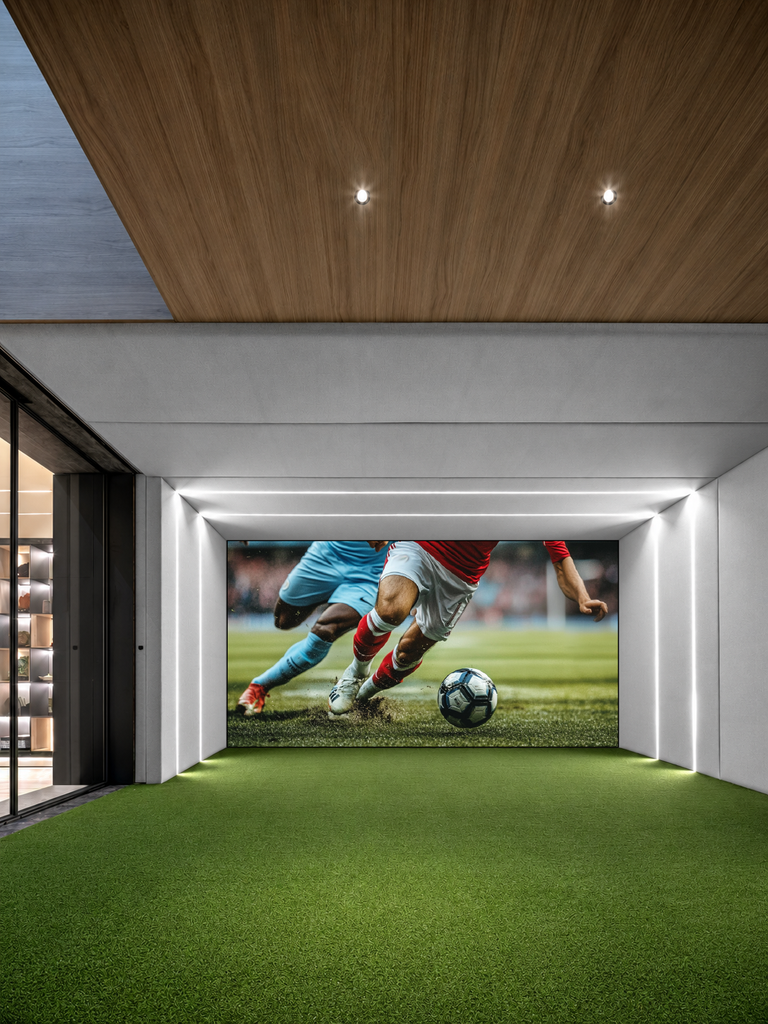
Brightness is measured in nits. A cinema screen sits near 48 nits, while a living room with windows benefits from about 1,000 nits. Ask for the sustained, full-screen brightness, not just a peak number, and how it can be adjusted for your room. Read our guide to LED wall brightness in nits.
LED walls use different construction methods, including SMD, GOB, and COB. COB places the LEDs directly on the board, which supports fine pitch and a smooth, durable surface. Ask which technology the vendor uses and why. Our posts on SMD, GOB, and COB and what COB technology is explain the differences.
The video processor scales each source, manages aspect ratios, switches inputs, and handles HDR. A weak one makes a great wall look soft. Ask how it scales your sources, how many inputs it has, which HDR formats it accepts, and what its latency is for gaming. Our guide to the LED video processor for home theater covers what to look for.
This is the most important question. A quote that lists only panels is incomplete. Ask for each line item in writing. Here are typical planning ranges for a premium residential system:
| Line item | Typical planning range |
| Video processor | 2,000–8,000+ |
| Mounting structure | 2,000–8,000 |
| Installation | 5,000–15,000 (complex projects higher) |
| Electrical work | 1,000–5,000+ |
| Calibration and commissioning | 1,000–3,000 |
| Shipping and handling | 500–3,000+ |
| Control integration | 1,000–5,000+ |
Planning ranges, not fixed prices. The display itself is usually the largest portion of the project.
For whole-project numbers, a premium residential wall typically runs about 20,000–60,000 for many 120–165-inch systems, and 75,000–150,000+ for large, highly customized installations. Our guide to MicroLED video wall cost breaks down every line item.
Installation is not “put the panels on the wall.” It includes cabinet assembly, alignment, power distribution, signal wiring, and testing. Ask who installs the wall, whether the quote includes structure and electrical work, and what your room must provide, such as dedicated circuits, ventilation, and a clear wall. Our beginner’s installation guide explains the basic steps, and the CEDIA association can help you find residential integrators.
Calibration tunes brightness, color, gamma, white balance, and uniformity for your room. Ask whether it is included. Also ask how the wall connects to your smart home. Integration with Control4, Crestron, or Savant lets one command dim the lights, switch the source, and set the right format.
Ask what the warranty covers, for how long, and who comes out if something needs attention. A wall is a long-term investment, so service matters as much as the hardware.
Ask for the module lifetime rating and what it means. IYO LED modules are rated for up to 100,000 hours. At six hours a day, that is more than 45 years. The rating does not cover every component, so ask about processors and power supplies too. Our post on permanent visual infrastructure explains why this matters.
Ask whether the vendor resells a factory product or engineers its own system. IYO LED is not a reseller. We combine advanced technologies, our own engineering, and specialized manufacturing partners to build systems around what the technology should be, and we design and engineer them in California.
Use this quick guide to set expectations:
| Tier | Budget | What it typically means |
| Entry-level premium residential | 20,000–30,000 | About 120–140″, standard configuration, straightforward installation |
| Serious luxury residential | 30,000–60,000 | About 140–165″, finer pitch, better processing, integration |
| Large-format premium | 50,000–90,000+ | About 165–205″+, higher-end processing, architectural needs |
| Ultra-premium custom | 75,000–150,000+ | Very fine pitch, 4K–8K+, custom dimensions |
Budgeting ranges, not fixed retail prices. The final number depends on the specification and site.
IYO LED offers three systems, each for a different kind of project:
| System | Best for | Typical budget |
| SERA | Structured, multi-format residential MicroLED | 20,000–60,000+ |
| Alinor | Fully custom walls at 4K, 6K, and 8K UHD | 50,000–150,000+ |
| Eredim | Permanent outdoor installations, 115″ and 159″ | 25,000–70,000+ |
SERA is often the best starting point for a home theater or living room. It can be configured for 16:9, 21:9, 1.90:1, 1.43:1, and 32:9. Alinor is for walls that must match an exact opening, with 0.6, 0.7, and 0.9 mm pixel pitch options. Browse our residential MicroLED displays to see them in real rooms.
Know your wall size and shape, your seating distance, the pixel pitch and resolution you need, the brightness for your room, and the complete installed price. Ask each vendor for an itemized quote in writing.
A premium residential LED wall typically costs about 20,000–60,000 for many 120–165-inch systems. Large, highly customized installations can reach 75,000–150,000+. The total includes processing, structure, installation, and calibration, not just the display.
For most home theaters with seating about 10 feet or more from the wall, 0.9 mm is a strong choice. Choose 0.6 or 0.7 mm if seats sit closer. Pick the largest pitch that looks smooth from your closest seat.
A complete quote should list the display, pixel pitch, resolution, video processor, mounting structure, electrical requirements, installation, calibration, shipping, control integration, warranty, and service.
Upfront, a TV costs far less. An LED wall is worth it when you want a larger or custom-shaped screen, strong brightness in daylight, and a permanent build that becomes part of the room. Our comparison of MicroLED vs OLED vs projector covers the trade-offs.
The right LED wall is not the biggest or the cheapest. It is the one that fits your room, your seating, your content, and your budget, with a quote that shows the whole system. These 12 questions give you the tools to compare vendors with confidence.
Ready for a real number? Contact IYO LED for a custom MicroLED quote. Send your wall dimensions, seating distance, and the formats you love, and we will help you design the right wall. You can also explore our residential MicroLED displays first.