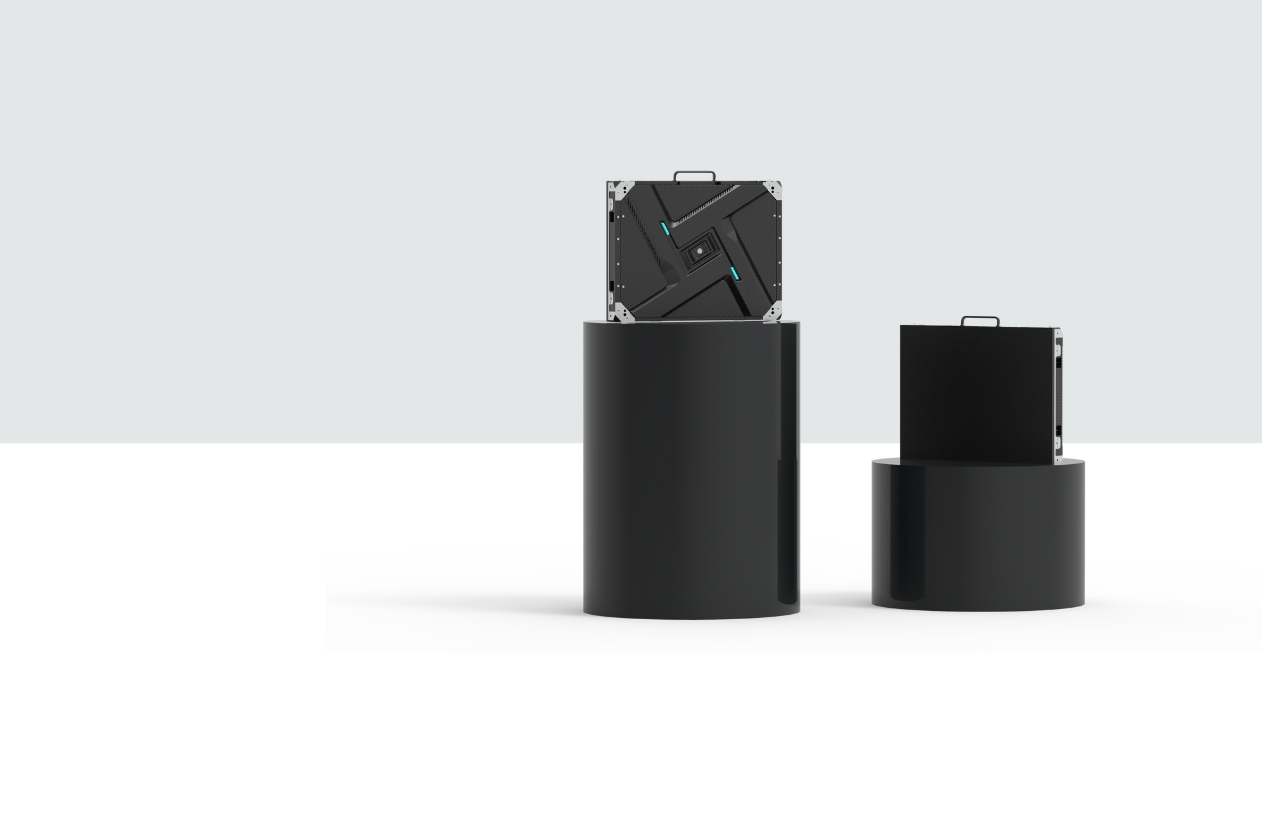
If you’ve read our beginner’s guide on LED walls, you already know that these impressive displays are built from smaller blocks called LED panels or cabinets.
But here’s the thing: not all LED panels are the same.
In fact, the type of cabinet you choose can affect everything from how your screen looks to how easy it is to set up, move, repair, or use outdoors.
So if you’re planning to buy, rent, or install an LED wall, this article will help you understand the different types of LED display panels, how they work, and which one might be right for your project.
What Is an LED Display Panel or LED Display Cabinet?
Think of an LED wall like LEGO.
Each piece (or panel) connects with others to form a giant, seamless screen. These panels are often called cabinets in the industry. Each one includes:
A frame
LED modules (the parts that light up)
Power supply
Cables and connections
Control system boards
Put together, they create a massive screen that works like a single video display.
Two Main Types: Indoor vs Outdoor Panels
Let’s start with the most basic difference—where the LED wall will be used.
Used in: billboards, stadiums, concerts, outdoor events
Beginner tip: Never use an indoor panel outside—it won’t survive the weather or be bright enough in sunlight.
Panel Material: Die-Cast vs Iron vs Carbon Fiber
The frame of an LED cabinet matters more than you’d think. Here are the common types:
🪵 Iron Panels
Heaviest option
Very strong and durable
Less expensive
Mostly used for fixed installations
Not ideal for frequent moving
🪶 Die-Cast Aluminum Panels
Lightweight but sturdy
Better for mobile setups or events
Excellent heat dissipation
Easy to lock together
Common choice for indoor and rental use
💨 Carbon Fiber Panels
Super light and ultra-thin
Used where weight really matters (e.g., fragile walls, ceilings)
More expensive
Niche use in high-end applications
Panel Size: Standard Dimensions Explained
While LED panels can come in many sizes, there are a few “industry standard” dimensions to help manufacturers and installers work efficiently.
Common indoor panel sizes:
500mm x 500mm (approx. 19.7” x 19.7”) – Very common for fine-pitch indoor displays; modular; lightweight.
500mm x 1000mm (approx. 19.7” x 39.4”) – Popular for events & rental setups; faster assembly; matches 16:9 aspect setups well when mixed with 500 × 500.
640mm × 480 mm (approx. 25.2″ × 18.90″) – Fits well with exact 4:3 ratio setups; often used in fixed indoor installations.
600mm × 337 mm (approx. 23.6″ × 13.29″) – Designed for native 16:9 aspect ratio LED video panels. Ideal for HD/4K wall builds.
These are popular for rental and event use—easy to stack and transport.
Larger cabinets (outdoor or fixed install):
960mm x 960mm
640mm x 640mm
Custom sizes are also available
Why size matters: Larger cabinets mean fewer seams and faster installation. Smaller cabinets allow for more detailed configurations or curved shapes.
Types of Installation: Rental vs Fixed Panels
Another key difference is how the panel is meant to be installed or used.
🔌 Fixed Installation Panels
Designed to stay in one place permanently
Usually bolted or mounted to a wall or frame
Can be heavier and more affordable
Ideal for signage, lobbies, showrooms, storefronts
🎪 Rental Panels
Built for quick setup and teardown
Use quick-lock systems and easy cable access
Lightweight and durable
Often rented for concerts, trade shows, events
More expensive due to portability features
If your screen needs to travel, go with rental panels. If it’s staying put, fixed installation panels make more sense.
Maintenance Access: Front vs Rear Service Panels
Here’s something many beginners don’t think about—but it’s super important for installation planning.
👨🔧 Front Service Panels
Allow you to access and replace parts from the front
Ideal for tight spaces with no back access
More common for indoor LED walls
🔧 Rear Service Panels
Require space behind the wall to open and service
Usually easier to cool and manage cables
Common in larger or outdoor installations
Some premium panels even support dual access—front and back—for maximum flexibility.
Curved Panels vs Flat Panels
If your design calls for a creative shape or curvature, there are options.
➿ Curved or Flexible Panels
Bend slightly to form concave or convex displays
Great for immersive experiences (like wraparound stages)
Requires specialized panel designs and frames
📏 Flat Panels
Most common and cost-effective
Best for standard video walls, signage, or presentations
Common Series or Model Types (Real-World Examples)
You might hear terms like “P2.5 rental panel”, “W series cabinet”, or “M P3.9 outdoor panel.” These refer to combinations of:
Pixel pitch (e.g., P2.5 = 2.5mm)
Use type (indoor/outdoor, rental/fixed)
Brand-specific design lines (like DM, MG, CA)
So:
A DW P1.9 might be a fine-pitch panel for high-resolution indoor signage.
A DM P2.9 rental cabinet could be a lightweight panel built for concert stages.
If you’re shopping, always ask for:
Pixel pitch
Panel size
Weight
Installation type (rental/fixed)
Front/rear service
Indoor or outdoor rating
Quick Summary: Choosing the Right LED Panel
Here’s a beginner-friendly cheat sheet to help you compare:
Feature
Option A
Option B
Use
Indoor
Outdoor
Material
Iron (heavy)
Die-cast Aluminum (light)
Pixel Pitch
Smaller (P1.5–P3.9)
Larger (P4–P10+)
Install Type
Fixed
Rental
Service Access
Front
Rear
Panel Shape
Flat
Curved (custom)
Final Thoughts
When you look at a massive LED video wall, it’s easy to forget the hard work and smart design behind the scenes. But it’s the LED panels—the building blocks—that make everything possible.
Whether you’re creating a permanent screen in a store or setting up for a one-night concert, choosing the right type of panel is key to a successful display.
Remember:
Think about where and how the screen will be used.
Choose the right material and pixel pitch.
Ask about access, weather resistance, and weight.
Work with a trusted supplier who can guide you through your options.
With the right panels, your LED wall will look stunning, work reliably, and deliver the impact you’re aiming for.
Share:
IYOLED
designs and engineers MicroLED
systems in California